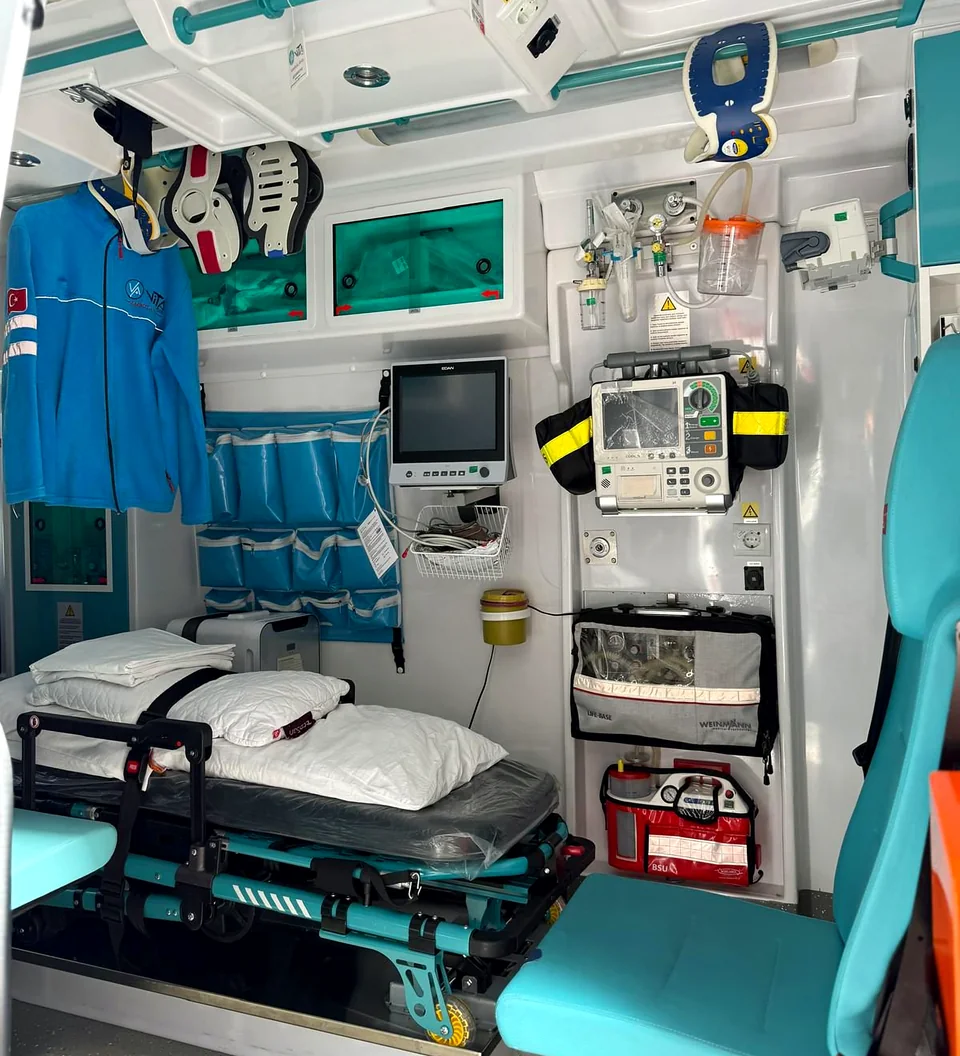
What families should prepare when a bedridden loved one is transferred from home to hospital or from hospital to home.

Don’t try to carry them yourself
Carrying a bedridden patient down stairs or through narrow spaces without proper equipment carries a serious risk of injury for both the patient and the carriers. The transport team plans to move the patient safely with suitable equipment.
Information to give the team in advance
- The patient’s approximate weight and height
- The route at home: floor, whether there is a lift, the width and turns of the stairs
- Devices the patient uses at home (e.g. an oxygen concentrator)
- Positions that increase pain or any movement restrictions
- Whether a companion will travel
Prepare the way
- Clear the route from the bed to the door.
- Keep doors fully open.
- Call the lift to the ground floor in advance.
- Decide where the vehicle can pull up in front of the building.
The patient’s comfort
- Choose seasonal clothing that is easy to put on and take off.
- A blanket and a small familiar pillow can help.
- If the patient has fragile skin or pressure sores, tell the team so they can take care while moving them.
Take with you
- ID and hospital documents
- Regular medications and a medication list
- Personal items such as glasses, hearing aids or dentures
- A phone and charger for the companion
Emotional support
The transfer may be worrying for the patient. Explaining calmly in advance what will happen, and having a familiar face alongside during the journey, helps the patient feel at ease.